


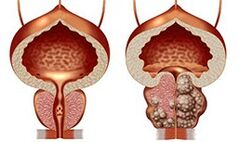
Prostatitis is an inflammation of the prostate gland (prostate), an organ that produces a liquid secretion that is part of semen.Pathology sometimes causes severe pain and problems with potency.It is reasonable to start treating prostatitis immediately after it is diagnosed.
Symptoms
Prostatitis usually affects men between 25 and 50 years of age.The pathology is very common.It affects between a third and a half of all men on the planet.The problem has many symptoms:
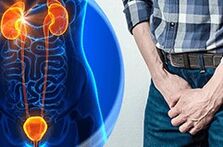
- a man experiences discomfort and pain during urination;
- urine flows slowly, in a thin stream, you need to squeeze it;
- At night and at other times of the day there is often a desire to relieve oneself.I cannot but feel that not all the urine has left the bladder;
- urine is cloudy, mixed with blood;
- pain in the lower abdomen, back, groin area and perineum (between the scrotum and anus);
- also haunted by pain, discomfort in the area of the testicles and penis;
- ejaculation occurs with pain;
Symptoms of prostatitis often appear, which are similar to a cold (low temperature, fever).They are characteristic of a type of bacterial pathology (more about it below).
reason
Prostatitis occurs more often in men who have previously had this disease.The problem is caused by:
- bladder and urethra infection;
- HIV and other diseases with which a man is infected during sex;
- injury in the pelvic area - fall from a bicycle or horse;
Catheter in the urethra to drain urine from the bladder causes prostatitis in men.
The pathology sometimes appears after a biopsy of the prostate, when a sample of its tissue is taken for analysis.After such a procedure, symptoms of prostatitis in men are rarely observed.
Complications
Due to prostatitis, you can:
- inflammation of the epididymis (epididymitis);
- the number of sperm decreases significantly and infertility appears;
- an abscess appears (a cavity filled with pus).

Numerous studies by scientists do not find a direct link between prostatitis and prostate cancer.
Types of prostatitis
Prostatitis has 5 main types: chronic and acute non-bacterial, chronic and acute bacterial, asymptomatic.
- Chronic non-bacterial(aka chronic pelvic pain syndrome).The most common (more than 90% of all patients suffer from it).Prostatitis symptoms are fickle, they come and go.No pathogens are found in the body.The diagnosis is established if for at least 3 months, a man suffers from pain in the pelvic area, discomfort during urination and other symptoms mentioned above.The exact cause of the disease is unknown, but it is probably caused by:
- neurological problems (neuropathy);
- irritation of the prostate, which causes poor flow of urine from the bladder;
- problems with the muscles of the pelvic floor (dysynergia);
- atypical, still unknown to science, viruses, bacteria.
- Acute non-bacterial.It is accompanied by chronic pain in the pelvic area and constant problems with urination.
- Acute infectious.The most severe type of disease.It happens rarely.Born of:
- E. coli, staphylococci and other bacteria;
- venereal pathologies (chlamydia, gonorrhea);
- Candida fungi.
- Chronic infectious.Pathology may not be felt for several years.Symptoms are similar to the acute bacterial type, but are not as severe.
- Asymptomatic.Discovered by chance.There are no symptoms.Ultrasound shows signs of inflammation and a blood test shows increased levels of prostate-specific antigen.
Symptoms develop quickly.Discomfort in the pelvic area is accompanied by genital pain, fever, nausea and burning pain during urination.Acute bacterial prostatitis can cause serious, life-threatening complications, such as abscesses, inability to urinate, and low blood pressure.
diagnostic
Diagnosis is made using:
- digital rectal examination;
- urinalysis.Necessary to determine if there is an infection in the prostate gland;
- blood test.The level of prostate specific antigen is checked.The test reveals signs of inflammation;
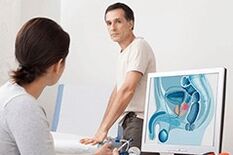
- Ultrasound of the genitourinary system.It is described when the above analyzes are not sufficient to make an accurate diagnosis.Ultrasound of the prostate is preferably done through the anus (transrectal method).
Also, sometimes the doctor analyzes the secretions of the prostate.To get it, the gland is massaged.
Tests may be prescribed for various venereal infections that cause inflammation of the prostate.
Professional diagnosis will allow you to prescribe the right treatment for prostatitis in men.
Treatment
If the prostatitis is bacterial, the doctor prescribes:
- Antibiotics.Their type depends on the bacteria identified.You should take the medicine for one and a half months.If the symptoms are very severe, antibiotics are given immediately intravenously.
- Alpha blockers.Medicines relax the muscles of the bladder where the prostate attaches to it.Relieves pain during urination.
- Analgesics- non-steroidal anti-inflammatory drugs.
You cannot prescribe medicine yourself.Only a doctor determines how to treat prostatitis.
Preventing
To prevent prostatitis:
- take a warm bath;
- apply a heating pad to the lower abdomen or back;
- stop drinking alcohol, caffeine, foods that increase acidity (spices, salty);
- We drink a lot of (unsweetened) juice.In this way we will wash the genitourinary system;bacteria will not have time to multiply;
- Let's try not to ride a bike for a long time, not to sit for a long time;
- do not forget about the hygiene of the penis and perineum;
- we use contraceptives;
- We play sports.Simple cardio exercises will be quite enough - start running, swim in the pool, do a light warm-up.
Prevention of prostatitis should become part of your lifestyle.Simple ways to protect the body.